
A BEST bus operating on a wet lease crashed into a roadside divider on the Sion-Panvel highway in Mumbai's Mankhurd area, resulting in one fatality and ten injuries. The driver claimed brake failure. This incident marks the third major BEST bus accident in Mumbai this month.

Corporate leaders' half-life has shrunk over the past few decades. That is the Tata experience as well. Over 144 years till 2012, Tata Sons had just five chairmen. However, in the 15 years till 2027, the same group will see three, points out R Gopalakrishnan.

Japanese automaker Honda plans to introduce over 10 new models, including electric vehicles and compact SUVs, in India by 2030, identifying India as one of its three key markets for future growth.

VinFast has gone from an unknown brand to India's fifth-largest EV carmaker in just seven months, but its toughest battle is only beginning.

From EV bus expansion to airport-like terminals and rural connectivity, Uttar Pradesh is overhauling public transport to cut pollution and ensure every village has modern, affordable travel, reports Siddharth Kalhans.

At an aggressive starting price of 18.79 lakh, the Tata Sierra.ev has a real-world range of 510 to 530 km with the 75 kWh battery pack on a single charge while the smaller 63 kWh battery coughs out a real-world range of 440 to 460 km, plus lifetime battery warranty as standard. And with the intelligent Quad-Wheel Drive system pushing out 504 Nm of torque, the EV flies from 0 to 100 km/h in just 5.8 seconds, says Rajesh Karkera.

Is this one car with options, or three distinct vehicles? Rajesh Karkera/Rediff.com finds out.

Indian car buyers care more about affordability than technology, keeping ICE vehicles dominant while hybrids emerge as the preferred transition option and EVs struggle in the mass market.

When we took the aaram se test, we found that it did offer huge head and leg room and a wee bit more space than what the prevailing autorickshaws offer.

Prime Minister Narendra Modi flagged off India's first hydrogen-powered train connecting Jind to Sonipat in Haryana, marking a significant milestone in the country's journey towards clean and sustainable railway mobility and showcasing the success of the 'Make in India' initiative.

As much as 35 per cent to 40 per cent of all vehicles sold in the country across segments will be electric by 2030, up from a mere 2 per cent this year, says a Bain & Co report released today. This translates to 14-16 million new electric vehicles (EVs) selling in a year. The inflexion point, which is now being seen month on month in many segments (such as two-wheelers which hit around 4-5 per cent in December), will be more than visible in 2026, when 4-5 million EVs across segments are expected to be sold, accounting for 15-20 per cent of the total sales, says the report.

Rural India outpaced urban centres in passenger vehicle sales in 2025, recording a growth of 12 per cent compared with 8 per cent in cities.
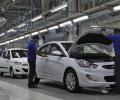
Rising automobile exports are reflective of the increasing acceptance of India-manufactured vehicles across global markets, according to Economic Survey 2025-26.
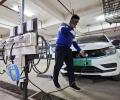
Electric vehicle sales registered a 55.2 per cent on-year growth at 1,79,038 units in July driven by a massive 96 per cent jump in e-two-wheeler sales, automobile dealers' body FADA said on Tuesday. The total electric vehicles sales for July 2023 were at 1,16,221 units, according to the monthly sales data from Federation of Automobile Dealers' Association (FADA).

Tata Motors' MD and CEO, Girish Wagh, has identified rising diesel prices as the most significant threat to India's commercial vehicle (CV) industry recovery, despite the sector recently surpassing its pre-FY19 wholesale peak. Diesel costs account for 25-50% of a truck operator's total cost of ownership, making any increase a critical concern for fleet economics.

Spreading risks in sourcing raw materials for electric vehicle (EV) manufacturing is "very critical" and the government can play a key role by enabling access to these from multiple locations worldwide, said Vivek Srivatsa, chief commercial officer at Tata Passenger Electric Mobility, on Friday while stressing the need for faster localisation, especially of batteries.
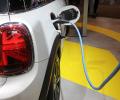
Electric vehicle retail sales in the country witnessed over three-fold jump last fiscal with two-wheeler offtake leading the segment, according to data compiled by automobile dealers' body FADA. Total electric vehicle (EV) retails reached 4,29,217 units in 2021-22, a rise of three-fold from 1,34,821 units in the financial year 2020-21, the industry body said. Total EV sales had stood at 1,68,300 units in the 2019-20 fiscal, it noted.
Vietnamese automobile major VinFast is rapidly expanding its retail network in India, aiming for 75 dealerships across 60 cities by the end of 2026, while also building a comprehensive EV ecosystem.

The passenger vehicle (PV) business of Tata Motors, which also includes the electric vehicle and Jaguar Land Rover businesses, post-demerger is now valued at Rs 1.45 trillion.

India's auto retail sector achieved record-breaking sales of 2,96,71,064 units in FY26, a 13.3% increase, primarily driven by the implementation of GST 2.0 which reduced the tax burden on mass-segment vehicles, according to the Federation of Automobile Dealers Associations (FADA).

Tata Motors Passenger Vehicles Ltd on Tuesday said it delivered over 1 lakh vehicles in 30 days from Navratri to Diwali, a growth of 33 per cent over the same period last year. The deliveries were led by SUVs with electric vehicles also showing strong traction, Tata Motors Passenger Vehicles Ltd managing director and CEO Shailesh Chandra said in a statement.

While SUVs have steadily gained share across the industry, data shows that nearly three in 10 luxury vehicles sold in India are sedans, highlighting the segment's resilience despite years of SUV-led growth.

Bharat Forge reported modest Q4FY26 results but provided strong guidance, anticipating significant growth from its defence, aerospace, and data centre segments, with a projected 25 per cent revenue growth in Indian manufacturing for FY27, despite current high valuations.
Even as the government debates whether to continue the FAME-II subsidy for electric vehicles (EVs), the share of such vehicles in overall sales is decelerating, after witnessing a heady growth in the first few years. The penetration of EVs - electric two-wheelers, passenger vehicles, three- wheelers and other segments collectively - in the first 10 months of FY24 has been pegged at 4.3 per cent, compared to 3.7 per cent in FY23, according to credit rating agency ICRA.

Despite BEST employees calling off their indefinite strike, Mumbai's bus services remained significantly below normal on Monday morning, with only 57% of the scheduled fleet operational. Commuters experienced long waits, leading many to seek alternative transport. The strike ended after an agreement with Deputy CM Eknath Shinde, which included interim pay hikes and commitments for future improvements and clearing dues.

India's electric passenger vehicle (ePV) market has expanded sharply over the past five years, with registrations rising from just 3,252 units in 2020 to about 170,000 in 2025. Throughout this scale-up, southern states have remained the bedrock of adoption, consistently contributing around one-third of national electric vehicle (EV) registrations - emphasising the region's role as the structural backbone of India's EV transition.

Rajesh Karkera takes his family of EV disbelievers on a road trip to Alibaug on the Mahindra XEV 9e and comes back as a unit singing the EV's praise. This is his account.

'Improved law and order and transparent governance have helped change UP's investment image.'

Network scale seen as central to tapping smaller markets.

US-based off-road vehicle (ORV) manufacturer Polaris Industries is considering introducing low-speed electric vehicles in India from the Global Electric Motorcars (GEM) portfolio. It had acquired GEM from Chrysler in June.

Tata Motors Passenger Vehicles (TMPV) on Friday reported a 13 per cent year-on-year (Y-o-Y) decline in consolidated revenue from operations for the second quarter of 2025-26 (Q2FY26), largely due to the cyberattack on its subsidiary Jaguar Land Rover (JLR) in late August that forced a shutdown of its manufacturing operations for over five weeks.
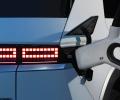
Under FAME-II, automakers provided subsidies to electric vehicle (EV) customers at the time of purchase, with the understanding that the government would reimburse the firms later.
BMW India has outpaced rival Mercedes-Benz India in luxury car registrations for the first quarter of calendar year 2026, driven by new product launches and a growing electric vehicle segment, even as the overall luxury car market remains largely flat.
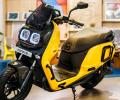
India's home-grown EV startups say the government's auto PLI scheme is helping big players while shutting out innovators building electric two- and three-wheelers from scratch.

A Rapido bike taxi rider was arrested in Kalyan, Thane, for allegedly molesting a 26-year-old woman passenger and stealing Rs 1000 from her. The incident has also raised concerns about unauthorized bike taxi services and violations of transport regulations.
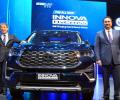
Grant Thornton Bharat's latest survey indicates that hybrids are set to consolidate market share this festive season, bridging the gap between conventional petrol engines and the emerging electric vehicle segment.
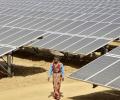
The push given to rooftop solar installation in the Interim Budget ties in with its high rate of adoption in Tier-II and -III cities of India. If original equipment manufacturers (OEMs) in the automobile industry, government, and the solar sector are to be believed, in cities of Rajasthan, Gujarat, and Kerala, 45-50 per cent of electric-vehicle (EV) users are employing rooftop power to charge their vehicles. This is compared to the national average of 25 per cent, say industry sources.

With increased consumer awareness and government support in place, it is the opportune time to enter the electric passenger vehicle segment, Mahindra Group Chairman Anand Mahindra said on Monday. With an eye on gaining leadership in the electric four-wheeler segment, the Indian auto major announced that it will launch five new electric Sports Utility Vehicles (SUVs) for both domestic and international markets, with the first four expected to hit the road between 2024 and 2026. The company would introduce the first of the five e-SUVs towards the end of 2024, starting with the Indian market.

India will have 30 per cent of its two-wheeler industry turning electric by 2030 as new manufacturers lead the shift, said a report on Monday. Passenger vehicles will be 15 per cent electric and the three-wheeler segment 75 per cent electric by 2030, said the report by BNP Paribas called 'India Autos-Electric vehicles: Minutes to midnight'. "We see FY22 as the year of inflection for the two-wheeler EV industry, with an accelerated EV adoption helped by incentives, wider availability, model launches, rise in crude prices and improved general awareness. We see 30 per cent of the 2W industry turning electric by 2030; the pace of incentive withdrawal presents an upside/downside risk," the report (India Autos - Electric vehicles: Minutes to midnight) said.

Government schemes such as the PM E-Drive initiative, with allocations of around Rs 2,000 crore for charging points deployment, are helping accelerate rollout
